



Book a destination demo
Let’s start with a conversation. Tell us a bit about your business and what you’re looking to achieve - we’ll guide you to the right next step. Fill in the form and we’ll connect you with the right person - whether that’s a demo, pricing, or expert guidance.

Destination management system in short
In short: A destination management system lets a DMO or region sell hotels, activities, attractions, events and transport as one bookable offer. With VISIT, visitors build a package and pay once, payouts are split automatically between the partners, product information is published once to every channel, and suppliers keep their own systems: VISIT connects to more than 100 of them. The same inventory reaches a B2B network of more than 15,000 travel agents and tour operators. Read more about destination commerce and dynamic packaging, the central reservation system (CRS) and the platform for destination marketing organizations.
Customer examples: Stromma Group, which operates in 17 destinations across five countries, sells its experiences with VISIT. Finnskogtoppen, a package-based destination, took online bookings from private guests from around 30% to more than 50%. Universeum adds external partner inventory and add-ons to its own offer.
Why destinations choose VISIT's destination management software
Find new partnerships
Join forces with other hotels, experiences, agencies, activities, and restaurants to create bundles that extend stays. We have the platform to connect and co-bundle, helping new partners go beyond and build destinations.
Get the bigger picture
Widen your perspective and learn how guests feel about the entire area you operate in. Understand demand, behaviour, and satisfaction, spot gaps, and make the entire destination more relevant and revisit-friendly.
Push all content
Centralise all destination content, listings, descriptions, images, opening hours, availability, pricing, and policies. Publish once and distribute everywhere. This keeps information accurate and consistent, drives inspiration, and powers a commercial marketplace.
One interface for all
Everything you need to run and grow efficiently: booking, ticketing, bundling, payments, CRM, POS, access and partner management. All in a single platform. We’re API-first and slot into all existing ecosystems. You’ll be connected and partnered up in no time.
Settle without hiccups
Automate revenue sharing and payouts between partners. Rules-based split, clear reports, and error-free reconciliation reduces admin, speeds cash flow, and keeps everyone happy.
Destinations and multi-partner operators that sell with VISIT


Modules in the VISIT destination platform
VISIT’s destination management system is built from these modules. Each card links to the full module page.
Destination building industries we serve
The VISIT platform is engineered for the interconnected nature of modern tourism. We provide the digital infrastructure that unites hotels, resorts, tour operators, attractions, and DMOs, enabling them to operate as a single, powerful entity.


FAQ
Something unclear? You’ll find answers to some of the most common questions here. And if you’d rather talk it through, we’re always here to help.
CONTACT USWhat is a destination management system (DMS), and how is it different from a DMC?
A destination management system is software: it connects the hotels, activities, attractions and transport operators in a region so a visitor can find and book them together, and so the destination organisation can see and sell the whole offer. A destination management company (DMC) is something else entirely – a travel agency that arranges trips and events on the ground for tour operators and corporate clients. Same acronym family, completely different business. VISIT builds the software: destination management software for DMOs, regions and the businesses within them.
What is destination management?
Destination management is the coordinated work of developing, marketing and selling a whole place rather than a single business – usually run by a destination marketing or management organisation on behalf of the hotels, attractions, restaurants and transport operators in a region. The commercial part is the hardest: a visitor wants to book a trip, while the destination is dozens of separate businesses with their own systems and their own availability.
How can a destination sell products from many different suppliers together?
By holding all of it in one inventory. VISIT's destination commerce platform aggregates live availability from hotels, activities, events and transport operators – including from their own separate systems – so a visitor can bundle a hotel, a museum ticket and a transfer into one package and pay for it once. Without that, the destination site can only link out to each supplier, and the visitor assembles the trip themselves across five checkouts.
Which channels can a destination distribute its inventory to?
The destination's own website, major OTAs, and a B2B network of more than 15,000 travel agents and tour operators – all managed from one hub rather than channel by channel (see how VISIT distribution works). For a destination the B2B side often matters more than the OTAs, because international tour operators sell whole regions as packaged itineraries, and reaching them is something individual suppliers in the region cannot do alone.
What if our suppliers already use their own booking or ticketing systems?
They keep them. VISIT connects to more than 100 external systems through open APIs and pulls live inventory from them, so a hotel on its own PMS and an attraction on its own ticketing platform both stay where they are and still appear in the destination's booking flow. This is the difference between a destination platform and a migration project: no supplier has to be persuaded to change software before the destination can sell them.
How do we keep product information consistent across every channel?
By holding it once. Descriptions, images and prices are collected and structured centrally, then published to every channel from that single record – so correcting an opening time or a price updates the destination website, the OTAs and the agent network together. The alternative is what most destinations live with: the same attraction described three different ways, with one of the three out of date and nobody sure which.
How are payments and payouts handled when several suppliers share one booking?
Through automated revenue splits. When a visitor books a hotel, a ticket and a transfer in one transaction and pays once, the money has to be divided between three businesses according to agreed terms, with a record each of them can reconcile. VISIT automates the split and the payouts based on your rules. Done manually this is the task that quietly consumes a destination organisation's finance capacity, and it gets harder with every supplier added.
Which destinations and operators use the VISIT destination management system?
Stromma Group operates in 17 destinations across five countries and sells its experiences with VISIT. Finnskogtoppen builds its offer on packages and now takes more than 50% of private-guest bookings online, up from around 30%. Universeum integrates external partner inventory and add-ons, Gausta is developing a year-round destination, and O'Gliss Park combines a water park with themed accommodation as one destination.
Destination insights: packaging, attractions, ferries and AI visibility

Insight
November 11, 2025
VISIT Redefines the Guest Journey by Merging Hotels and Attractions in One Booking Flow
VISIT is introducing new capabilities within its platform that bring hotels and attractions closer together.

Insight
October 21, 2025
From Living History to Digital Future: How Skansen Is Redefining the Museum Experience with VISIT
At Sweden’s most iconic open-air museum, history meets innovation as Skansen transforms its guest experience with VISIT’s Ticketing (powered by iTicket).
Insight
April 10, 2025
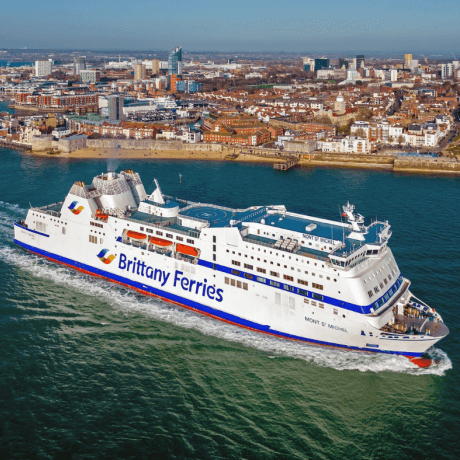
VISIT Welcomes Brittany Ferries as New Partner in Digital Transformation Journey
VISIT is proud to announce a strategic partnership with Brittany Ferries, one of Europe’s leading ferry operators, to accelerate the company’s digital transformation and enhance its customer experience.
Insight
September 21, 2026
VISIT Report: Invisible to AI
AI assistants now hand travelers a shortlist, not a page of links. Invisible to AI explains how those shortlists are built, why ratings and reviews decide who appears, what the evidence shows for hotels and experiences, and what you can do about it in the next 90 days.